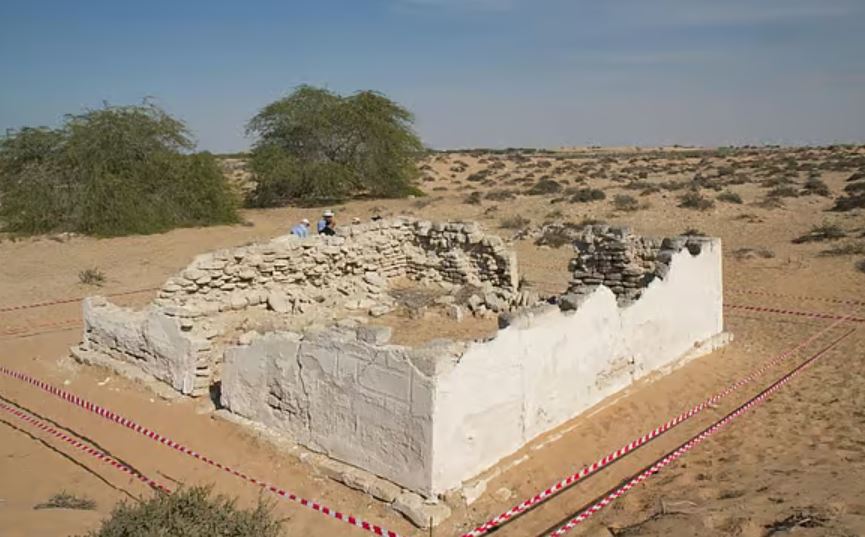
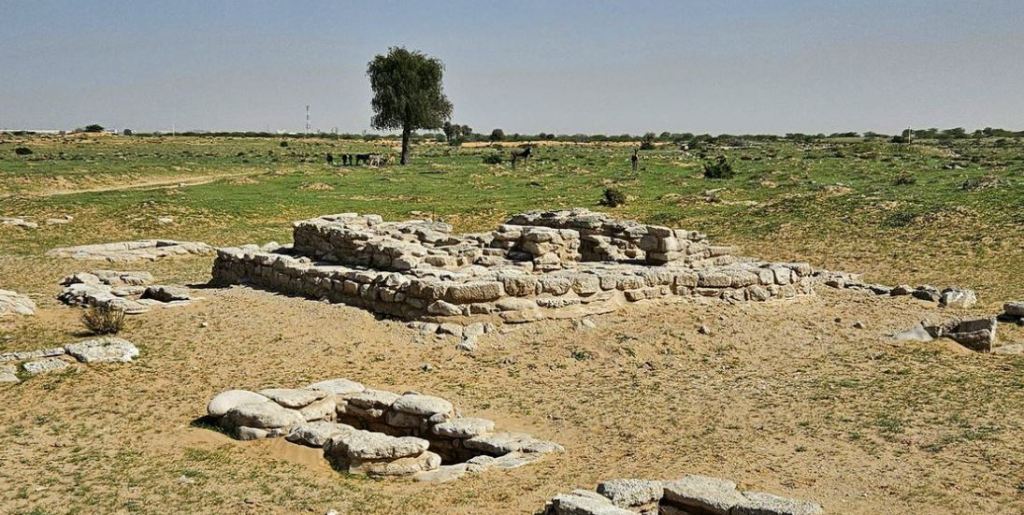
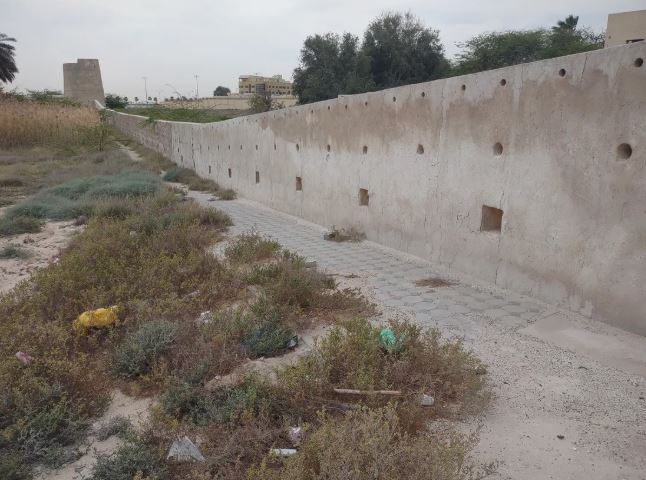
The Al Dour Stone Tombs are among the most fascinating archaeological remains in the Arabian Peninsula and provide a remarkable glimpse into the ancient civilizations that once flourished along the coast of the Persian Gulf. Located near the ancient settlement of Ed-Dur in present-day Umm Al Quwain, these tombs represent an important chapter in the history of trade, culture, and burial traditions in pre-Islamic Arabia. Archaeologists believe that the site dates back nearly two thousand years, making it one of the oldest and most significant historical locations in the United Arab Emirates. The stone tombs, scattered across the desert landscape, reveal the sophistication of the people who lived in the region and their connections with distant civilizations such as Mesopotamia, Persia, India, and the Roman world.
The tombs were constructed using carefully arranged limestone blocks and were designed to preserve the remains of the dead along with valuable burial goods. Many of the graves contained pottery, jewelry, weapons, glassware, coins, and decorative objects, indicating that the people of Ed-Dur enjoyed a prosperous trading economy. The design of the tombs also reflects strong cultural influences from neighboring civilizations. Some burial chambers were circular while others had rectangular layouts, suggesting that different social groups or families may have used distinct burial practices. Archaeologists have discovered that the tombs were often built in clusters, forming large cemeteries that extended across the surrounding desert. These burial grounds demonstrate the importance of ancestor worship and respect for the dead in ancient Arabian society.
One of the most remarkable aspects of the Al Dour Stone Tombs is their connection to the ancient trading city of Ed-Dur. Historians believe that Ed-Dur served as a major port along maritime trade routes linking Arabia with Mesopotamia, India, and the Mediterranean world. Merchants traveling across the Gulf brought luxury goods, spices, textiles, and precious metals through the region, contributing to the wealth and cultural diversity of the settlement. The objects found within the tombs provide evidence of this international trade network. Roman glassware, Indian pottery, and Parthian-style ceramics discovered at the site show that the inhabitants of Ed-Dur were actively engaged in global commerce long before the rise of modern trade systems.
The tombs also reveal valuable information about religious beliefs and funerary customs in ancient Arabia. Many graves contained offerings placed beside the deceased, including food vessels and personal belongings, suggesting that people believed in some form of afterlife. In certain tombs, archaeologists found incense burners and symbolic objects that may have been used in religious ceremonies. These discoveries help scholars understand the spiritual traditions of the region before the spread of Islam. The careful construction of the tombs and the effort invested in burial rituals indicate that honoring the dead held deep social and religious importance within the community.
Umrah Package from Dubai and Sharjah
In addition to their historical value, the Al Dour Stone Tombs are important for understanding the development of architecture in ancient Arabia. The builders demonstrated impressive engineering skills by creating durable structures capable of surviving harsh desert conditions for centuries. The use of local stone materials, combined with practical construction techniques, allowed the tombs to endure despite wind erosion and extreme temperatures. Today, the surviving remains continue to attract archaeologists, historians, and tourists interested in the rich heritage of the UAE.
Umrah Package by Bus from Dubai and Sharjah
Modern archaeological excavations have played a crucial role in preserving and studying the site. Since the discovery of Ed-Dur and its surrounding tombs in the twentieth century, researchers from different countries have conducted extensive surveys and excavations. Their work has uncovered thousands of artifacts and expanded knowledge about ancient Arabian civilization. The findings from Al Dour have transformed historical understanding of the Gulf region by proving that it was not isolated but instead connected to major world civilizations through trade and cultural exchange.
Umrah Package by Air from Dubai and Sharjah
The Al Dour Stone Tombs remain a symbol of the UAE’s deep historical roots and cultural heritage. They remind modern society that the Arabian Peninsula possessed thriving communities and sophisticated traditions long before the modern era. As archaeological research continues, the tombs will likely reveal even more secrets about the people who once lived and traded along the Gulf coast. Today, the site stands as a bridge between the ancient past and the present, preserving the memory of a civilization that contributed significantly to the history of the region.

 Dubai Umrah